1. Inspect Your Roof Regularly
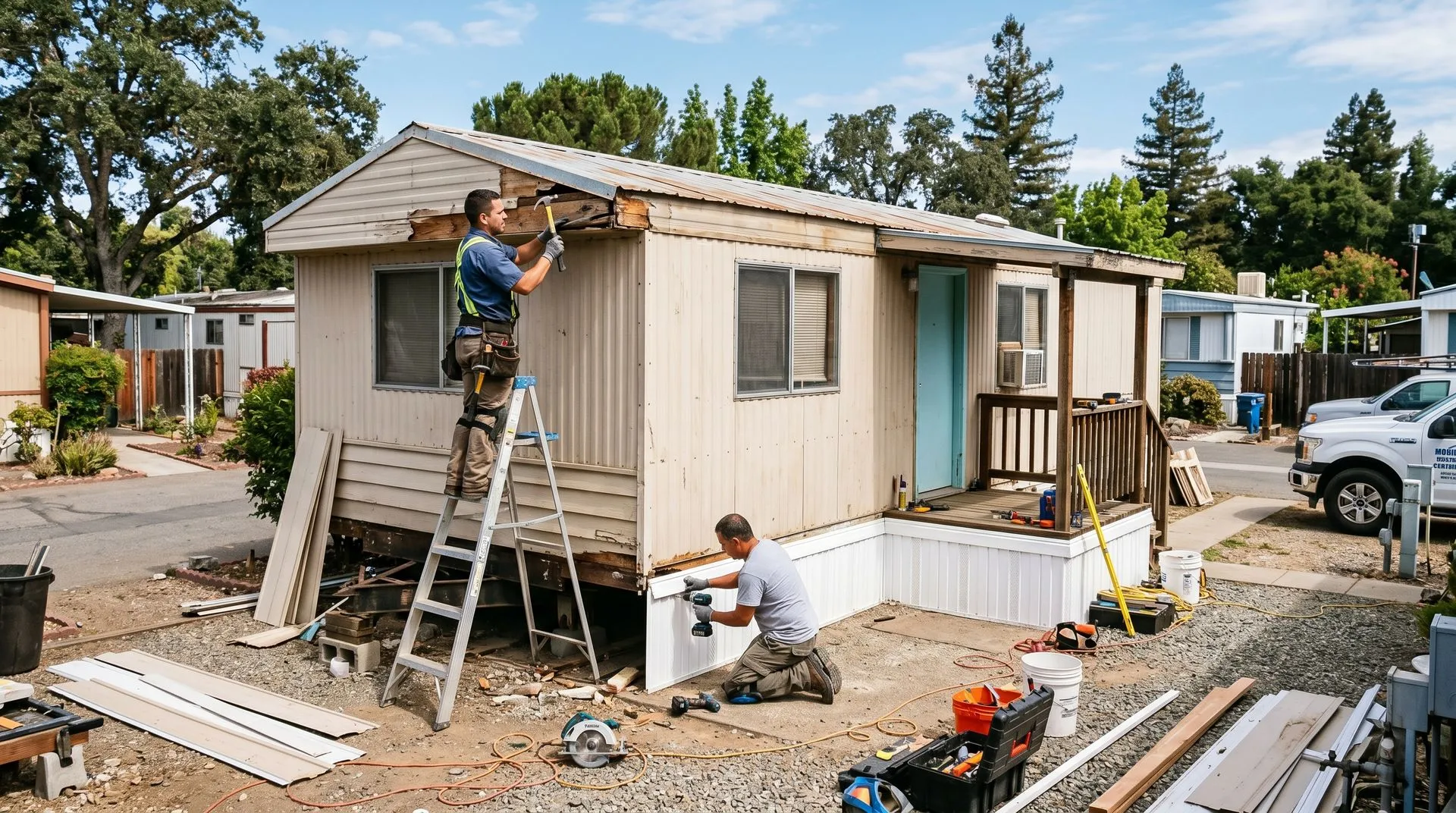
The roof is one of the most important parts of your mobile home.
Even a small roof problem can eventually lead to water intrusion, ceiling damage, insulation problems, mold, and structural issues.
Try to inspect your roof regularly, especially after severe weather.
Look for:
- Missing or damaged roofing materials
- Cracks or holes
- Loose flashing
- Damaged vents
- Areas where water may collect
- Signs of leaks inside the home
- Discoloration on ceilings or walls
If you notice a leak, don't wait for the problem to become worse. Water damage can spread quickly.
For safety reasons, homeowners should avoid climbing onto a roof unless they have the proper equipment and experience. When necessary, have a qualified professional inspect or repair the roof.
2. Check for Plumbing Leaks
A small plumbing leak can cause significant damage if it goes unnoticed.
Check underneath sinks, around toilets, near water heaters, and around exposed plumbing connections.
Watch for:
- Dripping faucets
- Wet cabinets
- Water stains
- Damp flooring
- Unusual odors
- Low water pressure
- Unexpected increases in water usage
Pay particular attention to areas around bathrooms and kitchens because these are common locations for plumbing problems.
Fixing a minor leak early is usually much easier than dealing with damaged flooring, walls, or cabinets later.
3. Inspect the Floors for Soft Spots
Soft or uneven flooring can be a warning sign that something is happening underneath.
A soft area may result from moisture damage, plumbing leaks, aging materials, or other problems.
Walk through your mobile home periodically and pay attention to areas that feel different from the surrounding floor.
Common areas to inspect include:
- Around toilets
- Near showers and bathtubs
- Around sinks
- Near exterior doors
- Around washing machines
- Under windows
If you notice a soft spot, investigate the cause rather than simply covering it with new flooring.
Replacing flooring without addressing the underlying moisture problem may only hide the issue temporarily.
4. Keep Gutters and Drainage Clear
If your mobile home has gutters and downspouts, keep them clear of leaves, dirt, and debris.
Blocked gutters can cause rainwater to overflow near the home, potentially contributing to moisture problems.
Make sure downspouts direct water away from the home's foundation or support area.
After heavy rainfall, walk around the property and look for areas where water is collecting.
Good drainage is especially important because excessive moisture around a mobile home can contribute to long-term problems.
5. Check Your Home's Exterior
The exterior protects your mobile home from weather and moisture.
Walk around the property several times a year and inspect the siding, doors, windows, skirting, and other exterior components.
Look for:
- Cracked or damaged siding
- Loose panels
- Gaps around windows
- Damaged door seals
- Missing skirting
- Signs of pests
- Water stains
- Areas where moisture may enter
Sealing small gaps and repairing minor exterior damage early can help prevent larger problems.
6. Maintain Your HVAC System
Your heating and cooling system plays an important role in comfort and energy efficiency.
Replace or clean HVAC filters according to the manufacturer's recommendations.
A dirty filter can restrict airflow and make the system work harder.
You should also keep vents and registers clear of furniture, dust, and other obstructions.
If your HVAC system isn't heating or cooling properly, unusual noises occur, or energy bills suddenly increase, consider having the system inspected by a qualified technician.
Regular HVAC maintenance can help extend equipment life and reduce unexpected breakdowns.
7. Inspect Your Mobile Home's Skirting
Skirting is more than a cosmetic feature.
It can help protect the area underneath the mobile home from weather, animals, debris, and unwanted airflow.
Inspect the skirting periodically for:
- Cracks
- Holes
- Missing sections
- Loose panels
- Damage caused by animals
- Areas where water may enter
Repair damaged sections when necessary.
However, don't block or cover required ventilation openings. Proper ventilation underneath a manufactured home is important, and any changes should follow applicable requirements for the home and location.
8. Watch for Moisture and Mold
Moisture is one of the biggest enemies of any home.
Inside your mobile home, pay attention to condensation, musty odors, water stains, and visible mold.
Bathrooms and kitchens deserve special attention because they naturally produce more moisture.
Simple steps can help reduce moisture:
- Use bathroom exhaust fans
- Repair plumbing leaks promptly
- Keep ventilation areas clear
- Use proper ventilation while cooking
- Address water intrusion quickly
- Keep the interior reasonably dry
If you discover significant mold or ongoing moisture problems, consider getting professional assistance to identify and correct the source.
Cleaning visible mold without fixing the moisture problem may not solve the underlying issue.
9. Check Doors and Windows for Drafts
Drafty doors and windows can make your HVAC system work harder and may allow moisture to enter.
Inspect weatherstripping, caulking, seals, and frames.
Look for:
- Visible gaps
- Cracked caulking
- Damaged weatherstripping
- Water stains
- Condensation
- Difficulty opening or closing windows
Replacing worn seals or repairing gaps can improve comfort and help reduce unnecessary energy loss.
10. Keep a Maintenance Record
One of the easiest ways to stay organized is to maintain a simple record of repairs and maintenance.
Keep track of:
- Roof inspections
- HVAC service
- Plumbing repairs
- Electrical work
- Appliance repairs
- Flooring replacement
- Exterior repairs
- Major renovations
- Receipts and warranties
A maintenance record can be useful if you eventually decide to sell your mobile home.
It gives potential buyers a better understanding of how the home has been maintained and helps you remember when important systems were last serviced.
Create a Simple Mobile Home Maintenance Schedule
You don't have to inspect everything every week.
A simple schedule can make maintenance easier.
Monthly
Check for:
- Plumbing leaks
- Water stains
- HVAC filter condition
- Unusual odors
- New cracks or damage
- Signs of pests
Every Few Months
Inspect:
- Windows and doors
- Skirting
- Exterior siding
- Gutters and drainage
- Floors
- Bathroom and kitchen areas
Twice a Year
Consider checking:
- Roof condition
- HVAC system
- Exterior seals
- Drainage around the property
- Major plumbing connections
After Severe Weather
Always inspect your property after significant storms, heavy rain, strong winds, or other severe weather.
Look for roof damage, leaks, damaged siding, standing water, broken windows, and other problems.
Addressing damage quickly can help prevent secondary damage.
Why Regular Maintenance Matters When You Want to Sell
Maintenance isn't only about keeping your home comfortable.
It can also help protect your investment.
A well-maintained mobile home may be easier to sell because buyers can have greater confidence in the property's condition.
However, not every homeowner has the time or money to keep up with every repair.
Sometimes a mobile home reaches a point where the owner doesn't want to invest more money into it.
If your mobile home needs extensive repairs, has been sitting vacant, or has become difficult to maintain, selling it as-is may be worth considering.
Instead of spending thousands of dollars preparing the property for a traditional sale, you can explore what a direct cash offer might look like.
What If Your Mobile Home Needs Too Many Repairs?
Not every maintenance problem needs to be fixed before selling.
If you're dealing with an older mobile home, major repairs, an inherited property, or a home you simply no longer want to maintain, you may have other options.
A professional mobile home buyer can evaluate the property based on its current condition and circumstances.
This can allow you to compare the potential cost of repairs against the possibility of selling the property as-is.
The important thing is to make an informed decision rather than automatically spending money on renovations.
Final Thoughts
Regular mobile home maintenance doesn't have to be complicated.
Small tasks such as checking for leaks, maintaining the HVAC system, inspecting the roof, keeping gutters clear, and monitoring moisture can help prevent bigger problems and protect your home.
The key is consistency.
If you notice a problem, investigate it early. A small repair today can potentially prevent a much larger expense later.
And if your mobile home has reached a point where repairs and maintenance are becoming too expensive or time-consuming, remember that selling as-is may be another option.
Cash4MobileHomes helps homeowners explore their options when they are ready to sell their mobile homes.
Whether your mobile home is well maintained, older, vacant, or needs significant repairs, you can contact us to discuss your situation.
Cash4MobileHomes
📞 334-324-1139
📞 770-744-3075
Thinking about selling your mobile home? Contact Cash4MobileHomes to learn more about your options.
.webp)